
The Mother Of All Surgeries in my thirties: Kirsty on how cancer doesn’t discriminate
Friday 27 February 2026
Maggie's, Dundee
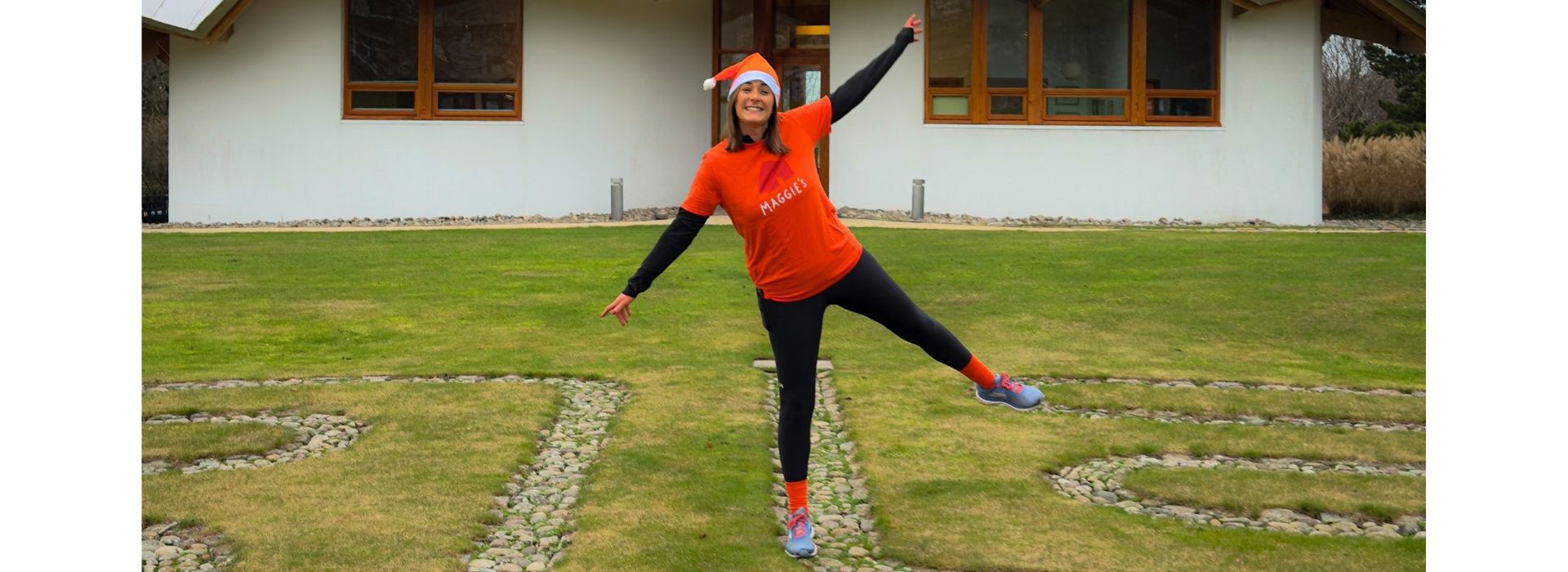
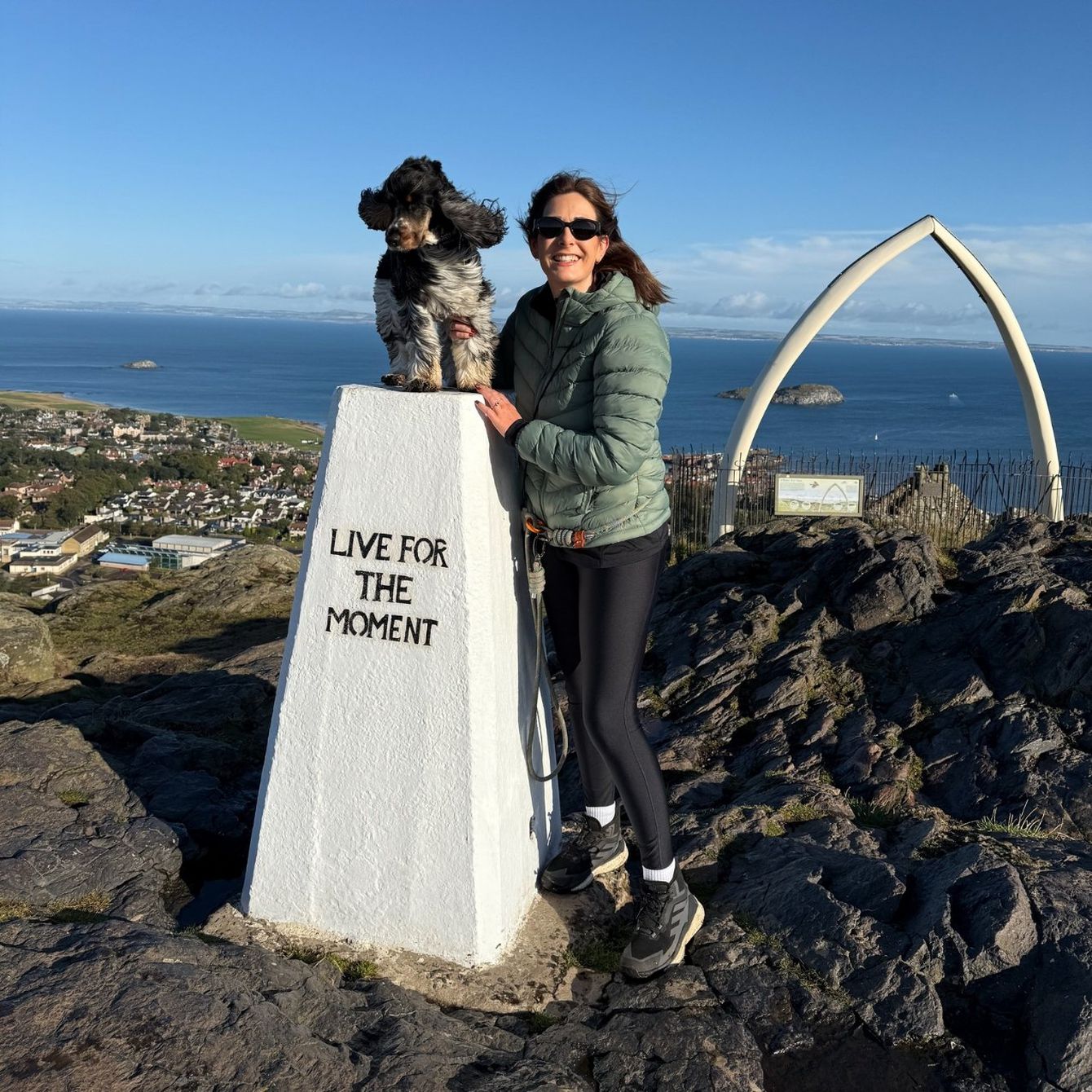
Following years of intermittent stomach pain, I was at the top of the Cairnwell mountain, Glenshee, in July 2024 when a stabbing pain in my lower right abdomen crippled me.
I’d felt a similar pain before and had been going to my GP over a few years, but I’d always been told it was either polycystic ovaries or IBS.
This time the pain was much worse – it came on fast, and before I knew it I was floored and lying on the ground.
Fortunately, I was able to gather myself , and my partner Neil and I got down the mountain. But I knew I had to get this investigated. It had been going on for too long and I knew something was very wrong.
Stomach so bloated I looked seven months pregnant
A call to my GP the next day was followed with a prescription omeprazole for the awful heartburn I was experiencing. But something still didn’t sit right with me, as my tummy was now very swollen and hard.
I called back a couple of days later and was asked to come in to be examined. By this point my stomach was so bloated that my GP likened it to being seven months pregnant.
They quickly ordered more tests to be done, and an ultrasound scan took place the next day.
What happened over the next seven weeks turned my life upside down.
I was only halfway home from the ultrasound appointment when I got a call to say that it looked like I had a very large growth, potentially in my ovaries, and that I needed to see a gynaecologist at a hospital in Perth.
I called a friend who rushed to meet me at home. I was in total shock. I remember sitting on my living room floor in hysterical tears. All I could think was that I had cancer.
After further tests, it was found that my blood tumour markers were off the scale for colorectal cancer. A CT scan then showed that the cancer cells had produced so much mucus in my abdomen that it was pushing on many of my vital organs.
My cancer was eventually diagnosed as Pseudomyxoma Peritonei (PMP), and it had started in my appendix. This cancer is often cited as one in a million for how rare it is. It was all very shocking.
16-hour surgery and chemotherapy
It was only seven weeks from the ultrasound scan to me having what is known as the ‘Mother Of All Surgeries’ – surgery to remove the affected abdominal organs, then heated chemotherapy drugs applied inside the abdomen to target any remaining cancer cells.
Ninewells Hospital in Dundee (where I live) is the only centre in Scotland that can carry out the surgery, performed by a highly skilled specialist surgeon.
Once I knew the surgeons had a plan, I didn’t allow myself think too far into the future.
I never ever googled my cancer. I was too afraid – I think I went onto autopilot and I let the experts take over and felt confident and trusted that they knew what they were doing.
During the surgery, seven complete organs were removed, including my appendix, gallbladder, spleen and a full hysterectomy, plus parts of three other organs, to remove all the visible cancer. A final flush of heated chemotherapy in my abdomen at the end of my operation meant I would not need any further active cancer treatment.
I allowed myself to put my trust in the hands of my medical team and to be guided by my surgeon. He really was a marvel of a man, who performed 16 hours of surgery to remove my cancer – and ultimately, get me well again.
Recovery from abdominal surgery
My recovery was long, and I had to live with a stoma for 6 months after my operation. This was very difficult to live with and get my head around in the early stages, especially after the shock of my diagnosis.
There was a lot of anxiety and worry around having a stoma, because mine was notorious for acting up. I found a great local support group who were a lifeline for me during this time.
I was able to have my stoma reversed in March 2025, but this did cause some complications – I ended up with an infected haematoma, which meant having to staying hospital for two months and to be fed through an IV drip.
It was a very tough time for me and my family. My parents, who live in Northern Ireland, were worried out of their minds, and came over to stay for a few weeks.
That was last March. Now I am now healing and in recovery, getting physically stronger and fitter, and making the most of my life with my partner Neil and my wee dog Archie.
I’m so grateful for everyone, including Neil, my mum, my dad and my sister, for looking after me after my operation when I really couldn’t look after myself.
The importance of speaking up
When I think back to my symptoms before diagnosis, I didn’t have a good appetite, yet I was putting on weight. I also had heartburn, was feeling breathless and there were dull pains in my abdomen, which ultimately became sharp, stabbing pains.
Things had not been right for a very long time before I was eventually diagnosed.
I knew I had to speak up about this, so I recently helped with starting to make a policy change at my local GP surgery. I did a talk to the doctors, and spoke about how I was almost silenced by one of their comments to me a couple of years before: ‘Well if you’ve had pain for this long, it can’t be anything serious.’
My symptoms may have been a bit vague and may have appeared a bit like IBS or polycystic ovaries, but it was much more serious – my cancer had been growing slowly and was taking over many of my internal organs.
I wanted the GPs at my surgery to listen carefully to other young people and to join up the dots when people present with symptoms that might initially sound vague. If the symptoms are ongoing and the person keeps coming back, GPs should ask themselves: could there be something else going on here?
I want them to remember that cancer does not discriminate; it can and does happen to people of any age.
I also urge other young people to have confidence when speaking with their GPs. Trust that you know your own body, and know that you need to speak up and advocate for yourself when speaking to doctors, especially if you feel you aren't getting answers.
Surviving my worst fear
When cancer comes into your life, you go from knowing what your future looks like, to suddenly being faced with your worst fears.
It’s a bit strange, because the fear changes. The fear of ‘What if it’s cancer?’, or ‘What if that happens to me?’, is replaced with the reality that it has already – I have faced cancer and been through such a major life-saving operation.
It doesn’t take the worries away, but it made me realise: the thing I feared the most has happened, and I am still here.
I am capable of surviving my worst fear. I am definitely stronger than I ever thought I could be.
Dealing with a new fear: the fear of recurrence
I feel grateful that my surgeon was so confident and capable of carrying out my surgery, but I do live with the worry of recurrence.
Every little twinge of pain or change in my body makes me question things and puts me on high alert. But I know I can’t question everything, and I need to take each day as it comes.
Many people may think that I look the same as everyone else, but they don’t know what I’ve been through or that I feel different. Looking well on the outside is not a reflection of how someone is feeling or coping.
I have had a lot to process in the last couple of years, and it’s made me a bit anxious, whereas I was never an anxious person before.
Having a hysterectomy at a young age dealt me a blow too by forcing me into a crash menopause, and this has probably added to the anxiety I feel. But I am allowed to take HRT, and this helps with some of my symptoms.
Visiting Maggie’s: nothing to lose, everything to gain
Through coming to Maggie’s in Dundee, speaking with the staff in such lovely, warm surroundings, and meeting other people who have been through experiences like me, I have got comfort from knowing I’m not alone.
I know I won’t be the same Kirsty as before, but I know I can still get on with and enjoy my life. And for that I am truly grateful.
I was apprehensive to visit Maggie’s at first because I felt it would make everything very real. But I have gained so much from going there and it has been so important in my recovery journey.
People who have a diagnosis, who are in recovery, or are caring for someone with cancer, need to know that Maggie’s offers fantastic support and that you can just go in in at any time without an appointment.
There is nothing to lose by visiting Maggie’s and everything to gain.
The first thing I did at Maggie’s was a Look Good Feel Better class, and this helped give me back some confidence.
I also did the seven-week ‘Where now?’ course as part of a group at Maggie’s, and that really helped me to look forwards again through a mix of talking, relaxation and exercise therapies. And then more recently I did the mindfulness course.
Going to an exercise class for core strength at Maggie’s helped me to lie on my stomach after my operation for the first time in over a year, and that was absolutely monumental for me.
Visiting Maggie’s is not just about having a cup of tea. Just coming into the centre makes you slow down - and you have conversations at the kitchen table that you just never know where they will lead, with people you may have never met before, yet you feel comfortable sharing with them.
There is a real sense of community, and whether it’s speaking with the cancer support staff there or other centre users, I know I always leave feeling better.
Looking forwards and fundraising
For me, this year means returning to work and returning to the world.
I’m an outdoors girl, and I use walking mountains as an analogy for my journey.
So, this is my year of getting out to my happy place on the hills, going away on road trips and away for weekends with Neil and walking Archie. I’m glad to be alive and I plan on making the most of it.
I will also be doing a Firewalk for Maggie’s this March, as well as the Discovery Mast Climb in May, because I want to give something back to the charity for everything they have done for me.
Become a Friend of Maggie's
Everyone with cancer deserves a place like Maggie’s. We want to continue to grow so that we can support everyone impacted by cancer in the UK.
It costs nothing to come into one of our centres - but it takes your kind donations to keep us free of charge for everyone living with cancer and their family and friends.
Become a Friend of Maggie's by donating, fundraising for us or getting involved, and help Maggie’s to be here today, tomorrow and always.
More stories from our centres
Show More StoriesGet cancer support near you
To find your nearest Maggie's centre, enter your postcode or town below.