
How cancer genes affected my whole family: Cat's story
Wednesday 25 February 2026
Maggie's, Nottingham
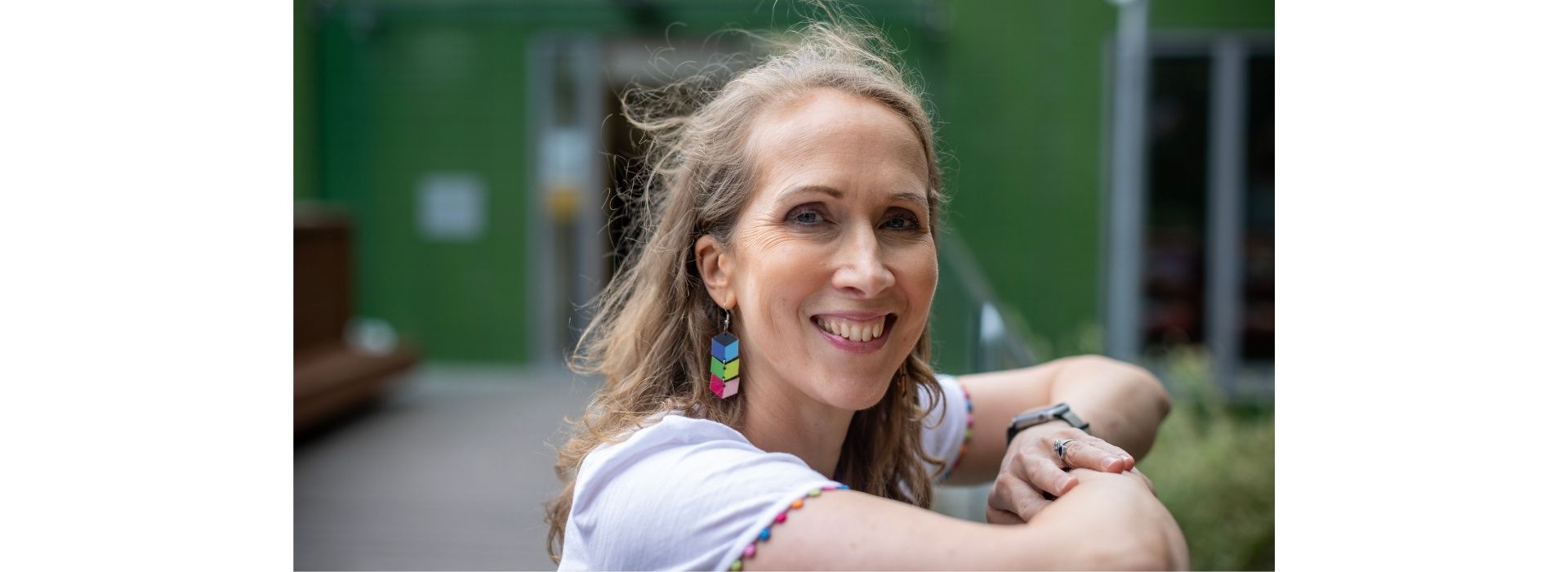
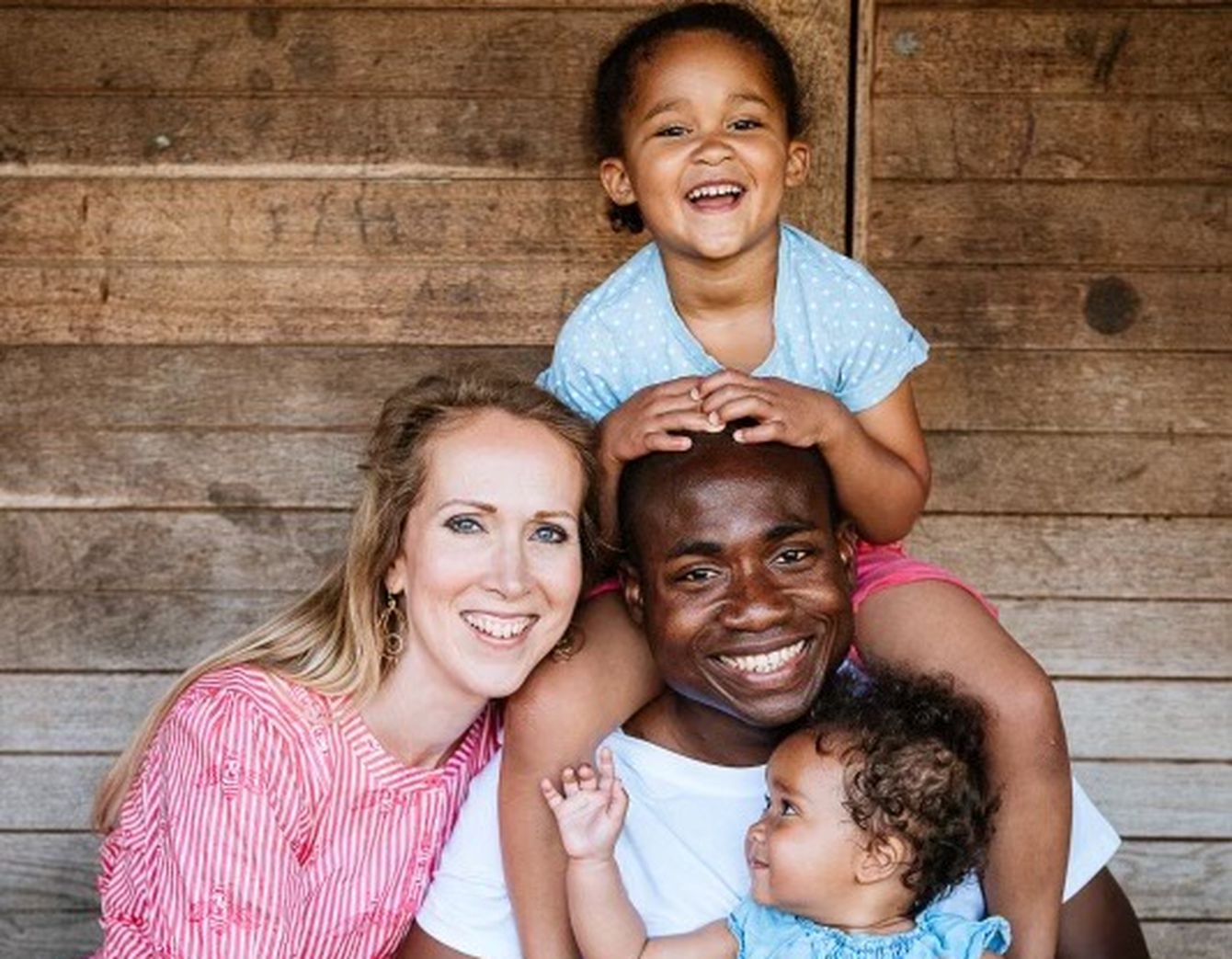
When I discovered a pea-sized lump in my breast, I kind of ignored it at first. My husband Dayo had been ill in hospital, and I was busy looking after our two daughters, Rosa and Alex, who were only 4 and 1.
A consultant rang me to say the lump was cancer, which was a major shock. I’m an optimist, so I clung to her words ‘small and treatable’ and convinced myself it would all be done and dusted in a couple of months.
I was only 41 and loved running, yoga, and dancing at kitchen discos. When I told my friends about the cancer, they all said that I was the healthiest person they knew. It didn’t seem possible.
I was given a lumpectomy, but it turned out that the lump was a lot worse than it had initially looked. At each appointment I had, I could feel my sense of hope being take away. Slowly, it turned into despair. When I was finally told the cancer had spread to my lymph nodes, I absolutely howled in the middle of the clinic.
Genetic testing and the impact on my family
While I was dealing with my breast cancer diagnosis, the doctors asked for my family history. My grandfather had died of breast cancer, so I was put forward for genetic testing.
The tests found that I had a rare, mutated BRCA2 gene, which meant that I was at high risk of early, aggressive cancer. It also meant that my dad and sister were at risk too.
The ripple effect of things going from my ‘small and treatable’ lump to a huge issue impacting my whole family was unbelievable. My sister Bex and I both have two children, so even they were affected with a 50:50 chance that they could inherit the gene too. It was horrendous.
Finding a home from home in Maggie's
My treatment was going to involve having a double mastectomy, chemotherapy, radiotherapy, hormone therapy and ovarian removal.
I’m lucky that I’ve got lots of supportive friends, but even so, it became clear that my husband and I weren’t in a great state mentally. Everything was up and down and exhausting.
One day, we came out of the breast clinic next to Maggie’s, looked at each other and said, ‘Should we just go in?’.
As soon as we walked in, it was clear that Maggie’s was this place of sanctuary.
Being in a hospital can feel like it's all about illness, disease and bleak things. But when you walk into Maggie’s, it’s beautiful, colourful and you feel a sense of life.
It makes you feel 100 times calmer than sitting on a chemo ward with the sound of beeping chemo machines and people hustling all around you.
And the staff were incredible. They understood what we were going through. I needed something that’d make me feel more like me. And Maggie’s was that place. It was a home from home.
Telling the children I had cancer
One of the best things Maggie’s did for us was to help us speak to the children about what was happening.
How do you tell your kids you have cancer? They were so young, we just didn’t know what to say.
Annie, the centre head at Maggie's in Nottingham, said, ‘Tell them how it is, in language that’s appropriate for their age, and they’ll get on with it because they don’t know any different.’
That was a game changer. I told my daughters, ‘Mummy’s going to have some special medicine and I’m going to lose my hair.’
My eldest just looked at me and said, ‘So you’re going to look like Daddy? That’s a bit weird.’
And that was it.
Chemo dressed as a superhero
To make my chemotherapy feel a bit less scary for the kids, I dressed up as a different superhero for each chemo session and they got to choose who I was.
I did all sorts. I was Wonder Woman, Spider Woman, Iron Man. In the end, it helped me feel better about facing the chemo ward too.
We were trying to choose who I should be for my last chemo and Rosa said, ‘But Mummy, you’re a superhero,’ which was perfect. For that session, I put on a gold sparkly turban and went as me.
Emotions at the kids' Christmas nativity
That Christmas, my chemo had finished and I went to Rosa’s school nativity. It was pretty emotional watching these small children with their angelic faces and thinking, ‘Am I going to get to see one of these again?’
I was just in floods of tears. It was incredibly tough. On the one hand I was thinking, ‘Why the hell has this happened to me? It’s so unfair.’
On the other, it was a reminder of how precious life is and how lucky I was to have so much love and support.
Support for my whole family at Maggie’s
During my treatment, my whole family visited Maggie’s for support. I went to the Look Good, Feel Better session for people losing their hair through chemotherapy, and later I joined the 'Where Now?' course, which helps you transition into life after treatment.
It was incredible. There were all different kinds of people in the group. On the surface, we had very little in common except this massive thing that had impacted our entire life. But we formed a bond as we began to realise that there is life after cancer.
My husband Dayo went into Maggie’s whenever he was struggling. People often forget how much cancer affects the support person, but he always had someone to talk to at Maggie’s and found that incredibly helpful.
Maggie’s was brilliant for our daughters, too. We took them to a Family Day at the centre, where a woman brought in snakes and spiders for the children to see. On the odd occasion we had to take the girls into the hospital with us, and going into Maggie’s made everything feel much more homely for them.
Dad’s diagnosis with breast cancer
My dad visited Maggie’s too. At one point it looked like I might have stage four cancer, and he was devastated. He went into Maggie’s sobbing and they helped him understand that it wasn’t the end.
Then, six weeks after my final surgery when we thought we could relax a bit, Dad was diagnosed with breast cancer. We went straight back to Maggie’s together, which was really emotional for both of us.
Dad joined the men’s group and the primary breast care group. It helped a lot that he already felt comfortable there.
Feeling good and grateful
Today, I feel pretty good. I feel lucky and grateful to have come out the other end. Dad’s finished his chemo, and my sister Bex has had a preventative double mastectomy and fallopian tube removal. I’m back at work in the civil service, and we’re living normally as a family again.
After everything we’ve been through, I was adamant about getting involved with fundraising for Maggie’s. For the Christmas Ball, I sold nearly 100 tickets and it felt really good to give something back.
Cancer can affect any and all of us, so supporting Maggie’s means you’re not just helping people today; you could be helping friends and family in the future too.
I don’t worry about things as much as I used to, but if I have a bad week or something happens to bring it all back, I’ll still pop into Maggie’s. Because Maggie's is my grounding place - it reassures me that things are going to be all right.
It’s like Maggie’s is always there in the background, holding you.
Become a Friend of Maggie's
Everyone with cancer deserves a place like Maggie’s. We want to continue to grow so that we can support everyone impacted by cancer in the UK.
It costs nothing to come into one of our centres - but it takes your kind donations to keep us free of charge for everyone living with cancer and their family and friends.
Become a Friend of Maggie's by donating, fundraising for us or getting involved, and help Maggie’s to be here today, tomorrow and always.
More stories from our centres
Show More StoriesGet cancer support near you
To find your nearest Maggie's centre, enter your postcode or town below.